AI agents: your company already has them. The problem is something else
AI agents for business only deliver on integrated, governed data. See why they fail, how to choose the first use case and how to measure the return.
In short
- AI agents for business are systems that plan, execute and adjust tasks inside operations, unlike chatbots, which only answer questions.
- The main reason AI agents fail to deliver is not the technology chosen, but data scattered across disconnected systems, out of date and with no defined owner.
- Before adopting agents, a company should integrate its systems, ensure real-time, up-to-date data and define who is responsible for each piece of data.
- The first agent should target a repetitive process with reliable data and a measurable goal, and be evaluated on time, rework and human intervention rate.
62% of large Brazilian companies already use AI agents in their operations.
More than 80% run multiple agents at the same time.
And most of them still haven't turned that into real results.
The wrong question about AI
The market spent the last two years asking: "when will we adopt AI?"
The question in 2026 is different: "why isn't the AI we already have working?"
An AI agent isn't a chatbot. It isn't an assistant that answers questions. It's a system that plans, executes and adjusts tasks within the operation, without constant human intervention.
Gartner projects that 40% of enterprise applications will have embedded agents by the end of 2026. In 2025, that number was below 5%.
Adoption has accelerated. Results haven't, yet.
Why agents aren't delivering on their promise
1. An agent without organized data isn't smart. It's just fast at getting things wrong.
An AI agent operates with the context you provide. If data is scattered across systems that don't talk to each other, the agent will execute with incomplete information.
Speed without accuracy isn't efficiency. It's automated rework.
2. Multiple agents without integration become autonomous silos
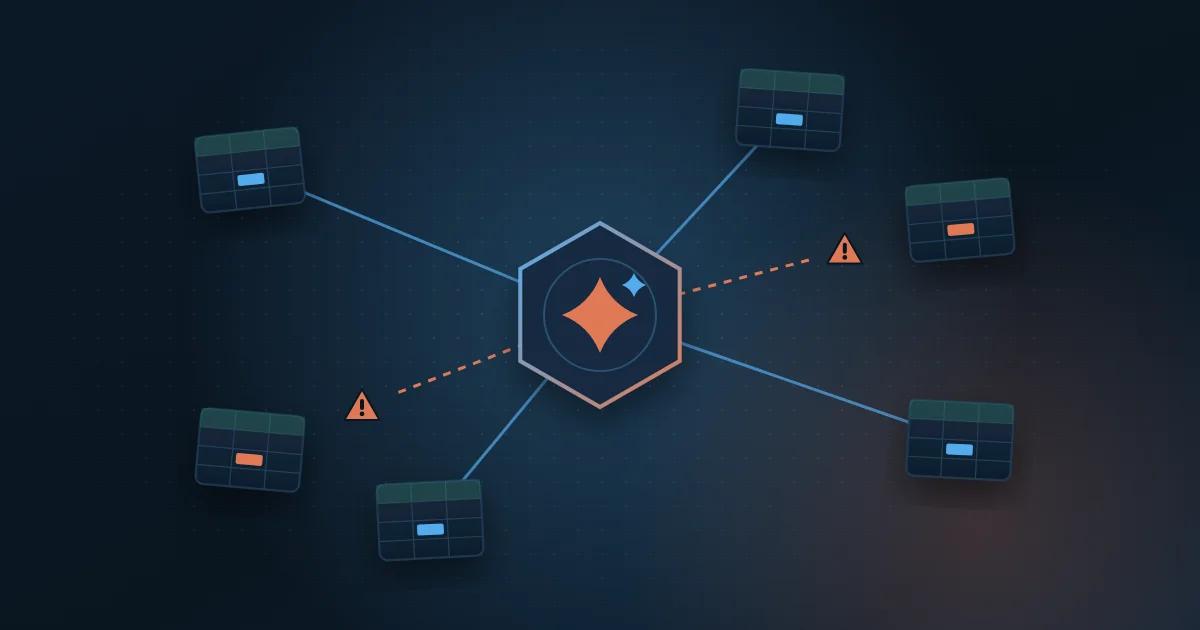
Most companies don't have one agent. They have several, each accessing different sources and running specific tasks without communicating with the others.
The result isn't a smarter operation. It's a more complex operation, with more points of failure and less visibility into what is happening.
3. Agentic AI only delivers real value on governed data
This is the point the market hasn't absorbed yet. An AI agent doesn't create structure; it operates on top of it. If the data foundation isn't organized, integrated and up to date, the agent amplifies the problem instead of solving it.
What really changes for people who run operations
The transformation isn't in the agent itself. It's in what the agent makes possible once the foundation is ready.
Operations that already have integrated data and connected systems are reaping concrete gains: automatic financial reconciliation, real-time anomaly alerts, end-to-end visibility without relying on manual reports.
Operations that adopted agents without organizing the foundation are finding out they automated chaos.
The difference between the two groups isn't the agent they use. It's the maturity of the data that feeds that agent.
So what should you do before adopting AI agents?
Order matters. And most companies are getting it backwards.
Three steps to reach agentic AI with the foundation ready:
- Connect the systems that don't talk to each other today. Billing, operations, tax and customer data need to speak the same language before any agent enters the picture
- Ensure real-time visibility. A decision made with yesterday's data is a risky decision. An agent that runs on outdated data makes the wrong decision at the right speed
- Define who owns each piece of data. Without clear governance, autonomous agents create inconsistencies that nobody can trace later
How to choose the first use case for an AI agent
Once the foundation is in place, the next mistake is starting too big. An agent that tries to run the whole operation from day one has more rules to follow, more systems to access and more chances to fail silently.
The best first use case is usually a process the team already knows well and that today eats up hours in repetitive tasks. Three criteria help narrow it down:
- A repetitive process with clear rules, such as reconciling entries, classifying tickets or checking documents
- Reliable input data, coming from systems that are already integrated and have a defined owner
- A measurable result, with a baseline for time, cost or errors recorded before the agent goes live
It is also worth defining from the start what the agent can do on its own and what needs human approval. Actions that cannot be undone, such as paying, canceling or sending something to a customer, should go through review until the agent proves it is consistent.
How to measure whether an AI agent is delivering results
Adopting an agent is not a result. The result is a process that gets faster, cheaper or less error-prone. And that only shows up when you compare it with how things were before.
The most useful metrics are simple:
- Average time per task, compared with manual execution
- Rework rate: how many agent runs had to be corrected
- Human intervention rate: how often someone had to take over the task
- Cost per run, adding up licenses, model usage and supervision hours
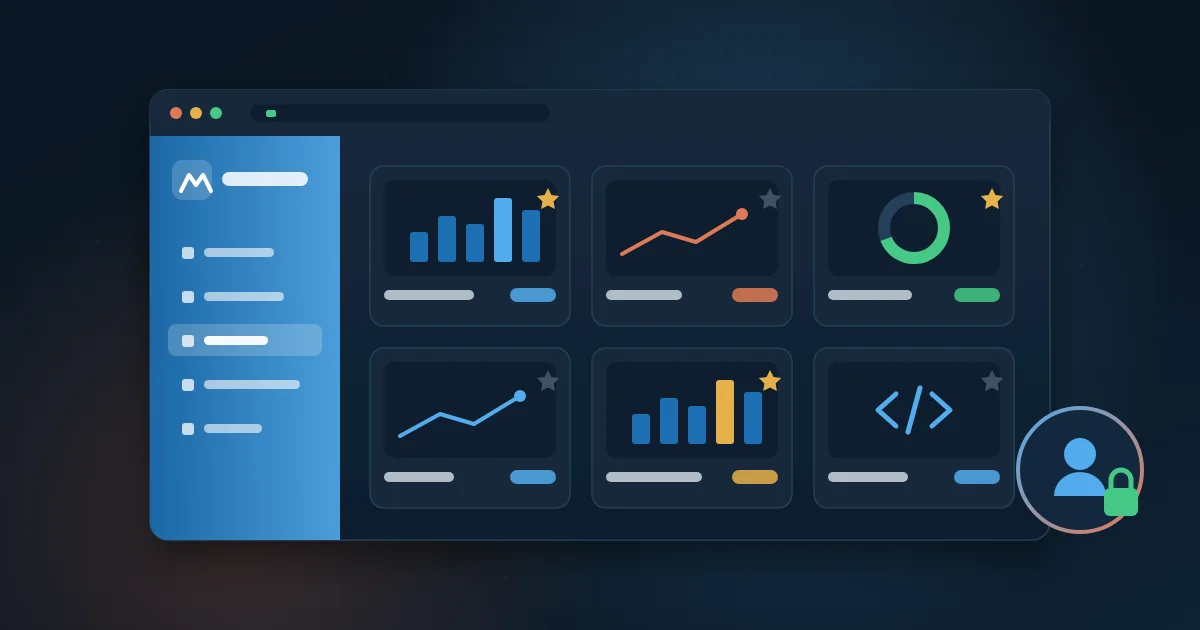
These numbers need to be on a dashboard that management follows, fed by the agent's own logs. Without a record of every action, there is no way to audit a wrong decision or prove the agent is worth what it costs.
If the intervention rate does not drop over time, the problem is rarely the model. It is almost always the quality or freshness of the data feeding the agent.
Is your operation ready for what agents demand?
Before asking which AI agent to adopt, it's worth checking whether the foundation that will feed it is organized.
Wolkee maps where the gaps are, connects what is disconnected and prepares the operation to get real results from AI, not just adopt the technology.
Tell us about your situation. Wolkee knows how to unlock it.
Frequently asked questions
What are AI agents?
AI agents are systems that receive a goal, plan the steps, carry out tasks in other systems and adjust course based on the outcome. Unlike a chatbot, which only answers questions, an agent acts: it queries data, fills in records, triggers alerts and kicks off processes, with human oversight at critical points.
What is the difference between an AI agent and a chatbot?
A chatbot talks; an AI agent executes. A chatbot answers one question at a time, within a script or a knowledge base. An agent receives a goal, decides the sequence of actions, accesses systems such as ERP and CRM and completes the task, checking with a person only when the rules require it.
Why do AI agents fail in companies?
In most cases, they fail because of the data, not the model. When information is scattered across disconnected systems, out of date or has no owner, the agent works with incomplete context and makes mistakes fast. Other common reasons are agents that don't talk to each other, a scope that is too broad and no metrics to measure results.
How do you implement AI agents in a company?
Start with the foundation: integrate your systems, ensure up-to-date data and define who owns each piece of information. Then choose a repetitive process with clear rules and a measurable result, and decide what requires human approval. Measure time, rework and intervention before and after. Wolkee offers a free 30-minute assessment to evaluate this starting point.