Brazil's free energy market: is your operational data ready for the transition?
Brazil free energy market for generators: CCEE settles every hour. See the operational data that cuts deviations, PLD exposure and financial losses.
In short
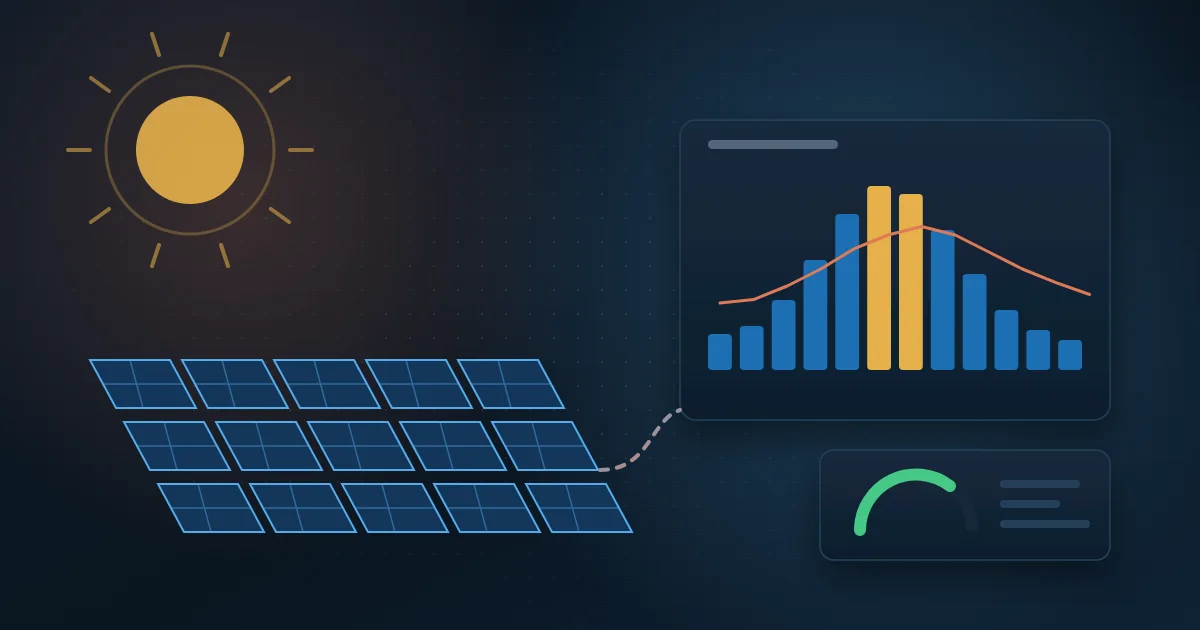
- In Brazil's free energy market, CCEE calculates energy by the hour: a generator must compare metered generation with contracted energy hour by hour, not just monthly.
- If a plant generates less than it sold in a given hour, it pays the difference at the short-term market PLD, a price that changes every hour.
- For a generator in the ACL, the three most critical operational data points are real versus contracted efficiency, traceability of each deviation's cause and the financial impact calculated in reais.
- If answering what the plant's real availability was yesterday takes more than an hour, its operational data is not yet ready for the free market.
Why the first six months in the ACL determine everything
Migrating to Brazil's free energy market is no longer a distant strategic option. For hundreds of power plants in Brazil, it is an imminent reality. And here is what most people aren't discussing: success in this transition depends less on contract negotiations and much more on control of operational data.
When you migrate to the Free Contracting Environment, you leave a predictable model with regulated prices and known demand and enter a landscape where every megawatt has a market value. That means small variations in your operational performance create large financial impacts. A manager who can track, analyze and optimize data in real time gets ahead. One who operates in the dark loses money every day.
The change nobody warns you about
In the regulated environment, the question was simple: did your plant produce what it was supposed to produce? In the free market, the question is more complex: did your plant produce exactly what you committed to sell, at the right time, with the expected quality?
In the ACL, you planned by the month. In the free market, it has to be by the hour.
In the regulated environment, monthly availability was enough. In the free market, buyers need to know your hourly availability. If you committed to supply 10 MW between 6 pm and 8 pm, Monday to Friday, you need that information consolidated in minutes, not weeks. Every hour outside that pattern is a contract deviation.
In the regulated environment, 5% swings in efficiency were absorbed by the tariff structure. In the free market, those same swings become deviation penalties, spot price exposure and, worse, lost reputation with your buyers.
How a deviation becomes a cost in Brazil's free energy market
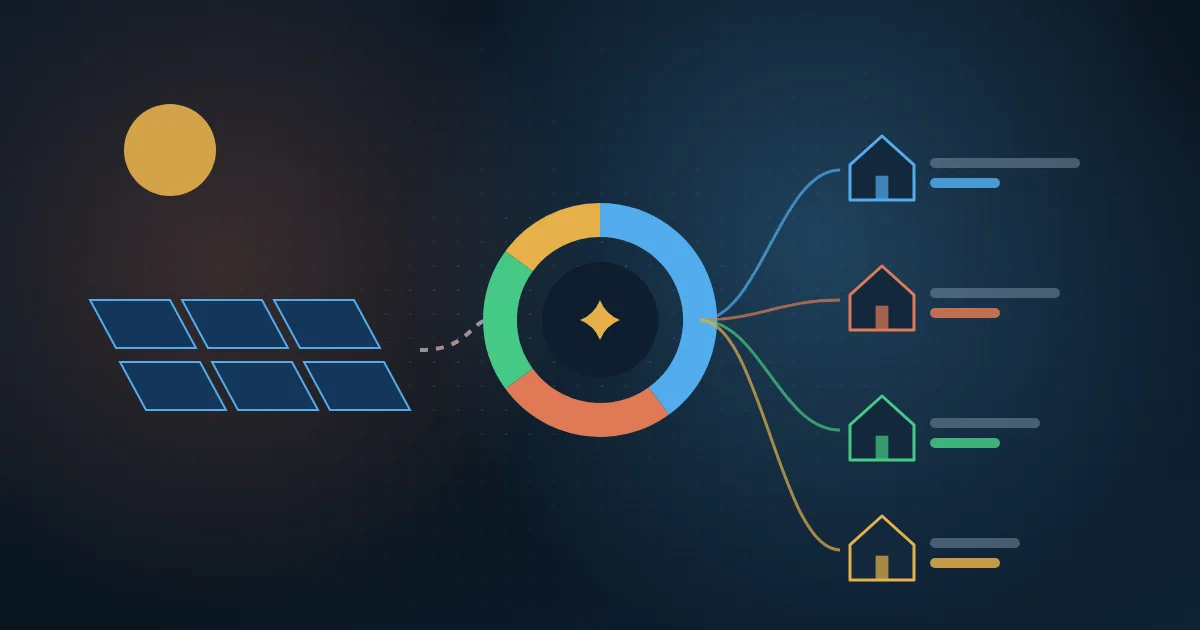
In the free market, a plant sells energy through contracts registered with CCEE, Brazil's electricity trading chamber. CCEE compares, hour by hour, metered energy with energy sold. The difference is settled in the short-term market at the PLD, the settlement price for differences.
If the plant generated less than it sold in a given hour, it pays the difference at that hour's PLD. If it generated more, the surplus is settled at the same price, which may be low precisely when many plants are generating together. Because the PLD changes every hour, the same MWh of deviation can cost little at one time and a lot at another.
The three critical data points every manager is looking for now
We're not talking about generic data. We're talking about very specific operational information that determines your financial results in the ACL.
Actual vs. contracted efficiency. The market needs to know whether your plant performs better at certain times of day or periods of the year. That intelligence makes it possible to price contracts correctly. Managers who understand their own efficiency patterns can negotiate premiums in periods of lower operational risk.
Deviation traceability. When you don't deliver the contracted energy, you need to document why in seconds, not days. Was it an unplanned outage? A transmission problem? An operating constraint? Each cause has different legal and commercial implications. Managers who master this tracking can defend themselves in contract disputes with facts, not assumptions.
Real-time financial impact. How much did your deviation cost, in reais? When you don't deliver contracted energy, someone has to buy it on the spot market. Managers who calculate these costs in real time can manage risk clearly and act before the problem escalates.
Whoever controls the data negotiates better. Whoever improvises loses money.
Managers who have already migrated report a pattern in the first six months: visibility into operational data doesn't keep up with the complexity of the new model. They lack quick answers to seemingly simple questions. What was my actual availability yesterday? Why did my efficiency drop 3% on Monday? When exactly did the unplanned outage happen? How much did it cost in market exposure?
Those who consolidated this data quickly got ahead on four concrete fronts:
- Negotiating contracts with premiums because they understand their real risk
- Responding to deviations in hours, not weeks
- Defending themselves in arbitration with data, not words
- Identifying optimization opportunities that increase profitability
Those who didn't achieve this visibility paid a high price: in unexplained deviations, in contracts negotiated in the dark and in opportunities that never come back.
Why most plants are still unprepared
The transition to the free market isn't just commercial. It's operational. But many managers inherit legacy systems that were built to answer to regulators, not markets. These systems fragment data into silos: SCADA here, SAP there, Excel spreadsheets somewhere else.
In the free market, this fragmentation becomes a brutal competitive disadvantage. You can't respond quickly. You can't trace the causes of deviations. You can't calculate financial impacts in real time. Meanwhile, managers of similar plants who consolidate this data are negotiating better contracts and defending themselves with facts.
The learning curve in the ACL is short. The first six months define everything.
Data checklist for generators in the free energy market
Test whether the plant can answer these points with data that is already consolidated, without building a spreadsheet on the spot:
- Metered generation by hour, compared with contracted energy for the same hour
- Real availability by hour, with planned and unplanned outages kept separate
- A classified cause for each deviation: equipment failure, maintenance, transmission or a restriction ordered by ONS
- Exposure for each hour in MWh and in reais, calculated with that hour's PLD
- A single source for these numbers, with no different versions across operations, sales and finance
Getting there means integrating metering, operations, contracts and prices into a single database, updated automatically. Every item that still depends on manual consolidation is a bottleneck to fix before the migration.
What to do before you migrate
If your plant is migrating to the free market soon, the critical question isn't which ERP system to adopt or how to structure your sales team. The question is: where are the bottlenecks in my operational data today?
Map your current systems. Identify where the data lives. Trace the path a critical piece of information takes through your organization. If the answer to "what was my actual availability yesterday?" takes more than an hour, you're at risk.
The transition is irreversible. The market won't wait.
How long does it take today to trace the cause of an operational deviation at your plant? Have you mapped where your critical operational data lives and how long it takes to consolidate it?
Wolkee runs this assessment before any implementation. No rigid scope, no vague promises.
Tell us about your situation. Wolkee knows how to unlock it.
Frequently asked questions
What is Brazil's free energy market?
Brazil's free energy market, or Free Contracting Environment (ACL), is where generators, energy traders and consumers trade energy directly, with price, term and volume set by contract. Contracts are registered with CCEE. In the regulated environment (ACR), consumers buy energy from the utility at a tariff set by ANEEL.
What is the PLD in Brazil's power sector?
The PLD is the settlement price for differences, which CCEE uses to value energy settled in the short-term market. It is calculated by hour and by submarket, between minimum and maximum limits set by ANEEL. For a generator, it determines how much each MWh delivered below the contract costs and how much each surplus MWh is worth.
Can a solar plant sell energy in Brazil's free market?
Yes. Utility-scale solar plants can sell energy in the free market through bilateral contracts registered with CCEE. The catch is the generation profile: a solar plant produces during the day, and contracts with delivery at other hours create PLD exposure. Distributed generation plants follow a different regime, based on credit compensation.
How can a plant reduce its PLD exposure?
PLD exposure drops when the plant knows its real hourly profile and contracts in line with it. That requires hourly generation history, the cause of each deviation and its impact in reais. With this data, the sales team adjusts contract volumes and shaping, and operations schedules maintenance outside the highest-risk hours.