Distributed generation credit management: from allocation to billing without spreadsheets
Distributed generation credit management: how solar credit allocation works, the monthly routine, utility bill auditing and the most common mistakes.
In short
- Law 14,300/2022 is the legal framework for distributed generation and defines the compensation system in which surplus energy becomes a credit in kWh.
- The solar credit allocation registered with the utility must match each client's contract, or billing will be wrong.
- The monthly routine involves collecting and reading utility bills, checking credits per consumer unit, calculating and issuing billing and disputing discrepancies with the utility.
- Auditing injected energy against the inverters and forecasting generation from solar radiation prevents credits from being lost, expiring or underbilled.
If you operate shared distributed generation, a consortium, a cooperative or remote self-consumption, you know the plant is only half the job. The other half happens every month: downloading dozens or hundreds of utility bills, checking that credits landed on the right units, calculating what each client owes and billing them. Done in spreadsheets, this cycle takes weeks and leaves money on the table.
Distributed generation credit management is the control of the energy the plant injects into the grid, of how those credits are split among beneficiary units and of how that turns into billing. Doing it well means three things: allocation that matches the contract, every bill read and checked, and generation audited against the inverters. A management system automates the routine and alerts you when something goes off track.
Below, we explain in general terms how energy compensation works, how to organize solar credit allocation, the monthly routine, auditing, generation forecasting and the most common mistakes. This is not legal advice: for specific cases, check current regulations and consult a specialist.
How does the electric energy compensation system work?
The legal framework for micro and mini distributed generation in Brazil is Law 14,300/2022, which established the Electric Energy Compensation System (SCEE), regulated by ANEEL, Brazil's electricity regulator. In simple terms: the energy the plant injects into the utility's grid and that is not consumed on site becomes a credit in kWh. That credit offsets the consumption of registered consumer units (UCs), within the same utility's concession area.
The law provides for different modalities. The most common for those who operate plants for third parties are:
- Remote self-consumption: the plant and the units receiving the credits belong to the same holder, such as a company with several branches, in different locations.
- Shared generation: several consumers join together in a consortium, cooperative, condominium or another form of civil association to use the energy from the same plant.
- Multiple consumer units: condominiums where the energy is split among the units and the common areas.
The law also set an expiration period for credits and a transition rule for charging for the use of the distribution grid (the component known as Fio B) in newer systems. These rules affect the economic value of the credits and need to be reflected in the calculations.
What are beneficiary units and how does credit allocation work?
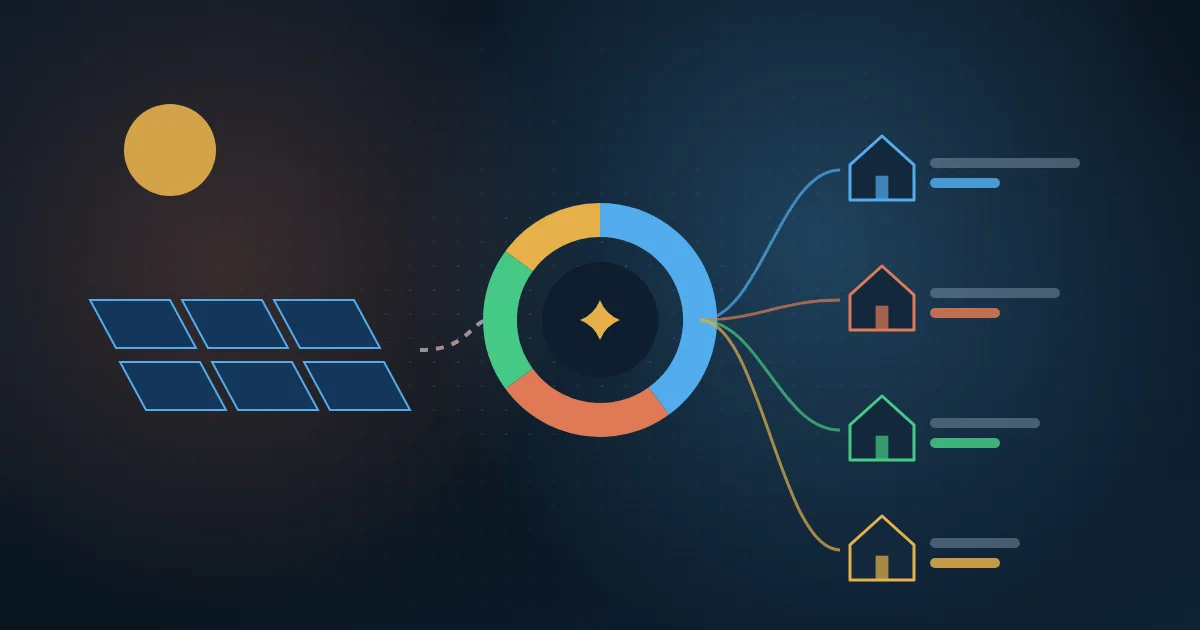
Beneficiary units are the consumer units that receive the plant's credits. The holder gives the utility the list of these units and the percentage for each one. For example, a plant may assign 40% of its credits to one client, 35% to another and 25% to a third. Every month, the utility applies these percentages to the surplus energy and offsets each unit's consumption.
The critical point is that there are two records of the allocation: the one registered with the utility and the one in the client contract. They must match. When a client joins, leaves or changes consumption, the percentage needs to be reviewed and the change requested from the utility, following its deadlines and procedures. Until the change takes effect, billing should follow what was actually offset.
Good allocation also considers the consumption profile. Assigning a unit more credit than it consumes builds up a balance that can expire. Assigning less leaves the client paying for grid energy and lowers the perceived value of the contract.
What does the monthly credit management routine look like?
Regardless of portfolio size, the routine follows the same cycle:
- Collect the bills: download, from each utility's portal, the bill for the generating unit and for every beneficiary unit.
- Read the bills: extract consumption, injected energy, offset credits, accumulated balance, tariffs, taxes and meter reading dates.
- Check the credits: compare what was offset at each unit with the registered percentage and with the contract.
- Calculate billing: apply each client's commercial rule, such as a discount on the tariff or a price per offset kWh.
- Issue and track billing: generate the bank slip (boleto) and the invoice (NF-e), send them to the client and record the payment.
- Handle discrepancies: file a dispute with the utility when the bill is wrong and fix records when the error is internal.
Steps 1 and 2 take the most time. Bots can download bills automatically, and utility bill reading with AI extracts the fields in minutes, with validations that flag what needs human review.
How do you audit the energy reported by the utility?
The generating unit's bill shows how much injected energy the utility recorded. The plant's inverters record how much was generated. The two numbers will not be identical, because of internal consumption, losses and the gap between the meter reading date and the calendar month. But the difference should be stable and explainable.
Auditing means comparing, every month, the injected energy on the bill with inverter generation over the same reading period. A discrepancy above the historical pattern may point to a reading error, a meter problem, estimated billing or a registration failure. Without this check, the operator accepts the utility's number without question, and credits that should exist simply don't show up.
How do you forecast generation from solar radiation?
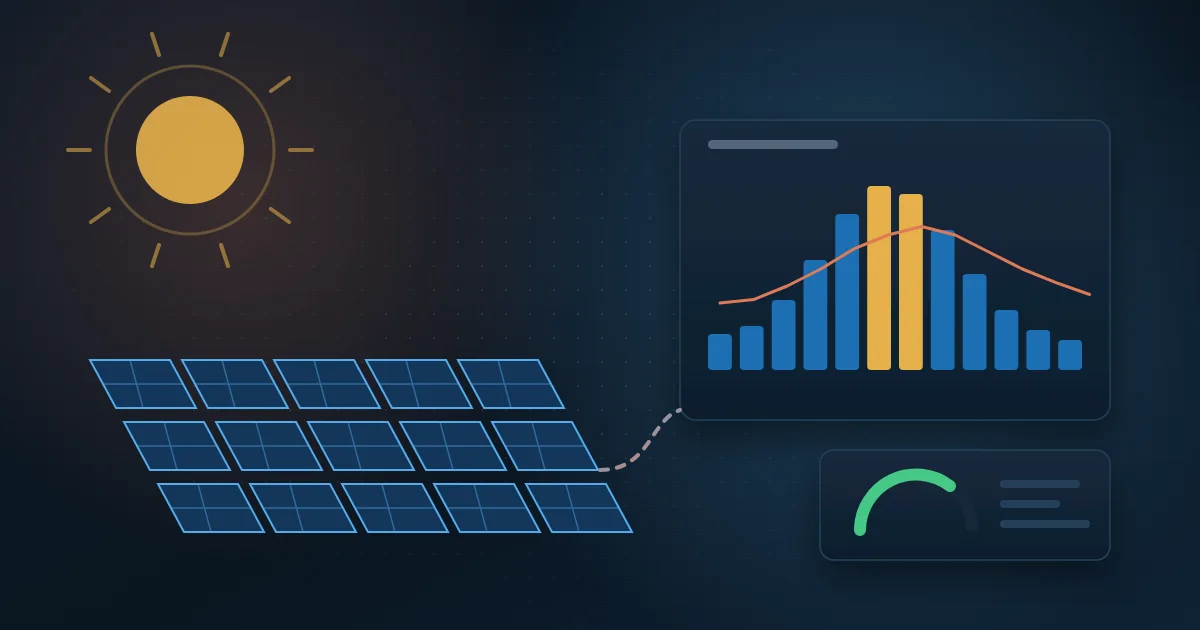
A PV plant's generation depends mainly on the solar radiation reaching the panels, the installed capacity and the system's performance. With radiation data from weather stations or satellites, you can estimate how much the plant should generate in each period.
This forecast has two practical uses. The first is operational: if actual generation falls below what is expected for the recorded radiation, there are signs of dirty modules, a stopped inverter or shading. The second is commercial: estimating the credits for the coming months helps adjust the allocation, plan new client onboarding and avoid accumulated balances that expire.
The same logic of reliable operational data applies to anyone working in Brazil's free energy market: metering, contracts and billing need to talk to each other.
What are the most common credit management mistakes?
- Wrong allocation: a percentage at the utility that differs from the contract, or a client who left and still receives credits.
- Unread bills: one unit forgotten in a month means offset credits that were never billed.
- Expired credits: an accumulated balance above what the unit can consume, which expires without generating revenue.
- Manual spreadsheets: broken formulas, different versions circulating by email and dependence on one person.
- Outdated tariffs: utility rate adjustments that never make it into the billing calculation.
- Discrepancies accepted without auditing: differences between bill and inverter that nobody disputes.
What does a credit management system need?
Use this list as a checklist when evaluating a tool or specifying a system:
- Registry of plants, consumer units, clients and contracts, with a history of allocation percentages.
- Automatic bill collection from utility portals.
- Automatic bill reading, with validation and a review queue for doubtful cases.
- Reconciliation between offset credits, registered allocation and contract.
- Billing calculation and issuance according to each client's commercial rule.
- Auditing of injected energy against inverter data.
- Generation forecasting based on solar radiation.
- Alerts for missing bills, discrepancies, balances close to expiring and late payments.
- Dashboards by plant, client and utility, with control over who sees what.
- Audit trail: who changed what and when.
To know whether management is working, track a few indicators every month: bills read and checked out of all consumer units, offset credits not yet billed, credit balances close to expiring, the gap between injected energy and inverter generation, and days between the bill reading and billing issuance. If any of them gets worse, the problem shows up before it turns into a loss.
How Wolkee helps
Wolkee builds custom systems for solar energy that manage more than 1 GW of plants. Bots download the bills, AI reads them, credits are allocated per contract, billing is generated, the energy reported by the utility is audited against the inverters and generation is forecast from solar radiation. At Grupo Paulo Octavio, bill reading went from three weeks to minutes.
If your credit routine still depends on spreadsheets, book a free 30-minute assessment. We learn about your operation, show you where the risks are and, if it makes sense, you see a working prototype before the contract. We reply within 1 business day.
Frequently asked questions
How long are solar energy credits valid?
Under Law 14,300/2022, energy credits generated in the compensation system expire after 60 months. In practice, this requires tracking each consumer unit's accumulated balance and adjusting the allocation when a unit receives more credit than it can consume. Expired credits are generated energy that becomes neither savings for the client nor revenue for the operator.
Can you change the credit allocation percentage?
Yes. The plant holder can ask the utility to change the list of beneficiary units and the percentages, following each company's procedures and deadlines. The change is not immediate, so billing should be based on what was actually offset on the bill. Keeping a history of changes avoids disputes with clients.
Can distributed generation credits be used with another utility?
No. Compensation happens between consumer units served by the same utility, within the same concession or permission area. A plant connected to one utility cannot offset the consumption of units served by another. That is why operators with plants in several regions need to organize their client portfolios by utility.
What is the difference between shared generation and remote self-consumption?
In remote self-consumption, the plant and the units receiving the credits have the same holder, such as a company's headquarters and branches. In shared generation, different consumers join together in a consortium, cooperative, condominium or civil association to split a plant's credits. The modality defines who can receive credits and how the contract is structured.